
Monday, Oct. 5, 2026
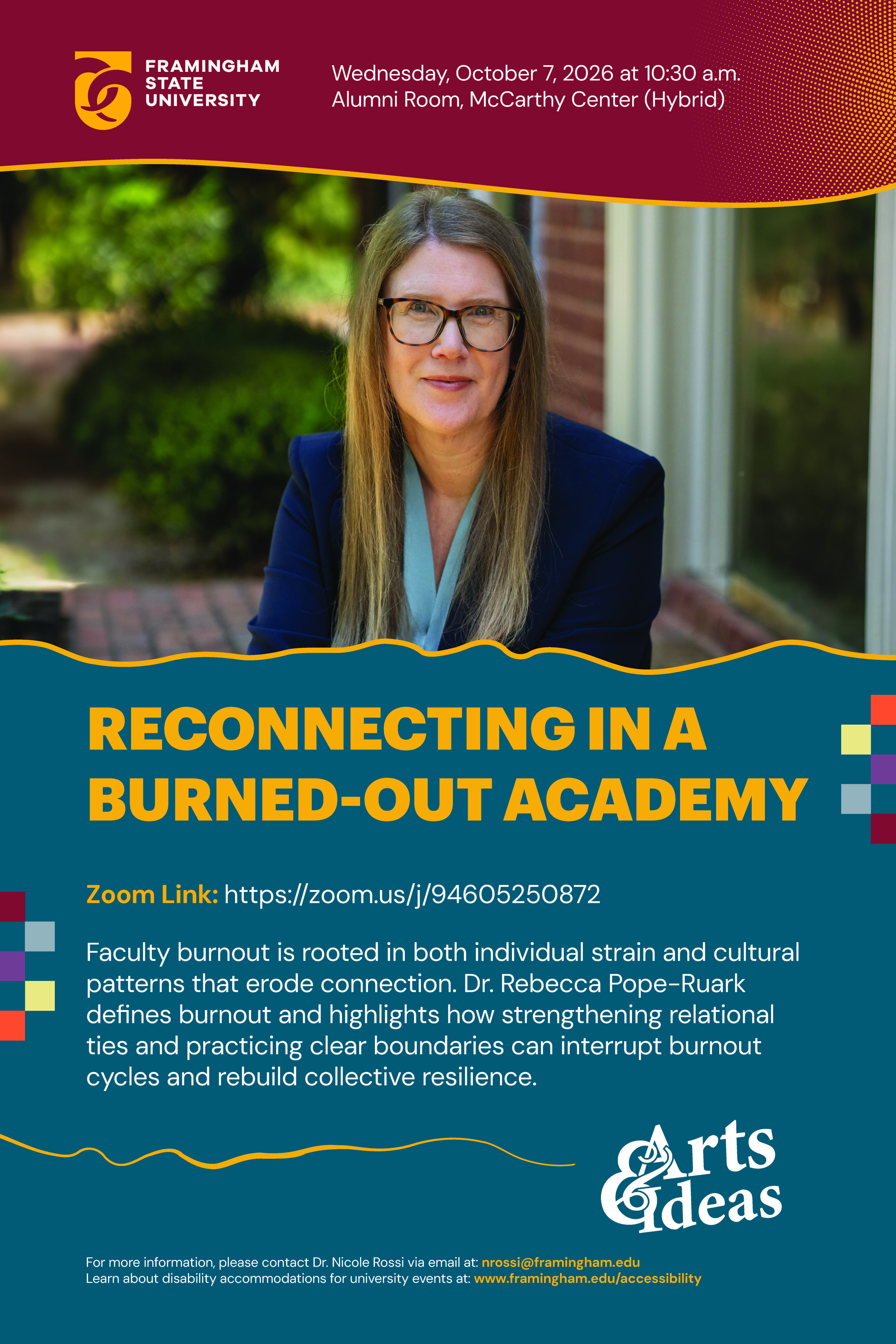
Arts & Ideas: Reconnecting in a burned-out academy
Wednesday, Oct. 7, 10:30 a.m.
Hybrid: Alumni Room, McCarthy Center and zoom
Faculty burnout is rooted in both individual strain and cultural patterns that erode connection. Dr. Rebecca Pope-Ruark defines burnout and highlights how strengthening relational ties and practicing clear boundaries can interrupt burnout cycles and rebuild collective resilience.
Free Flu and COVID-19 Vaccine Clinics
The Health Center is sponsoring two COVID-19/Influenza Vaccination Clinics conducted by MetroWest Pharmacy
Dates/Times: Wednesday October 7 (10am-1pm) & Thursday October 8 (2pm-4pm)
Location: Dwight Hall-Small Gymnasium
Registration: REGISTER HERE *** print and bring registration with you!
Cost: Your insurance will be billed, and there is no copay to receive these vaccines.
Pollinator Garden Cleanup
Monday, Oct. 5, 1:30 to 3:30 p.m.
Meet in the garden behind Hemenway Hall
Join us to help tidy up our campus pollinator gardens as we head into fall. Tools and gloves will be provided. Stay for as little or as long as you'd like.
Speak Boldly, Learn Freely: Say No to Self-Censorship
Tuesday, Oct. 6, 10:30 a.m. to noon
McCarthy Center Forum and zoom
In time for this year's Banned Books Week, the Henry Whittemore Library and the Framingham State University Education Department invite you to join us in the McCarthy Forum on Tuesday, October 6th at 10:30AM for Speak Boldly, Learn Freely: Say No to Self-Censorship, featuring State Education Secretary Dr. Stephen Zrike Jr. and State Rep. Sean Garballey.
Encouraged by this year's theme - “Let Books Be — Protect the Freedom to Read”- local legislators will discuss the recent passage of An Act regarding free expression S.3241, a bill that outlines the process for local leaders, schools, and libraries to decide which books to make available for students and patrons in their communities.
Our featured speakers will be followed by a faculty and student panel addressing the implications of self-censorship on educators, students, and the future of scholarship
Historias que enseñan: Conversations with Spanish teachers
Monday, Oct. 5, 4:30 to 6 p.m.
O'Connor Hall 120
Every teacher has a story. Join us for a relaxed conversation with two Spanish educators as they share their journeys, challenges, and experiences in and beyond the classroom.
Come listen, ask questions, and be part of the conversation!