
April 21, 2026
Science on State Street
Saturday, April 25, noon to 3 p.m., McAuliffe Center and O'Connor Hall parking lot
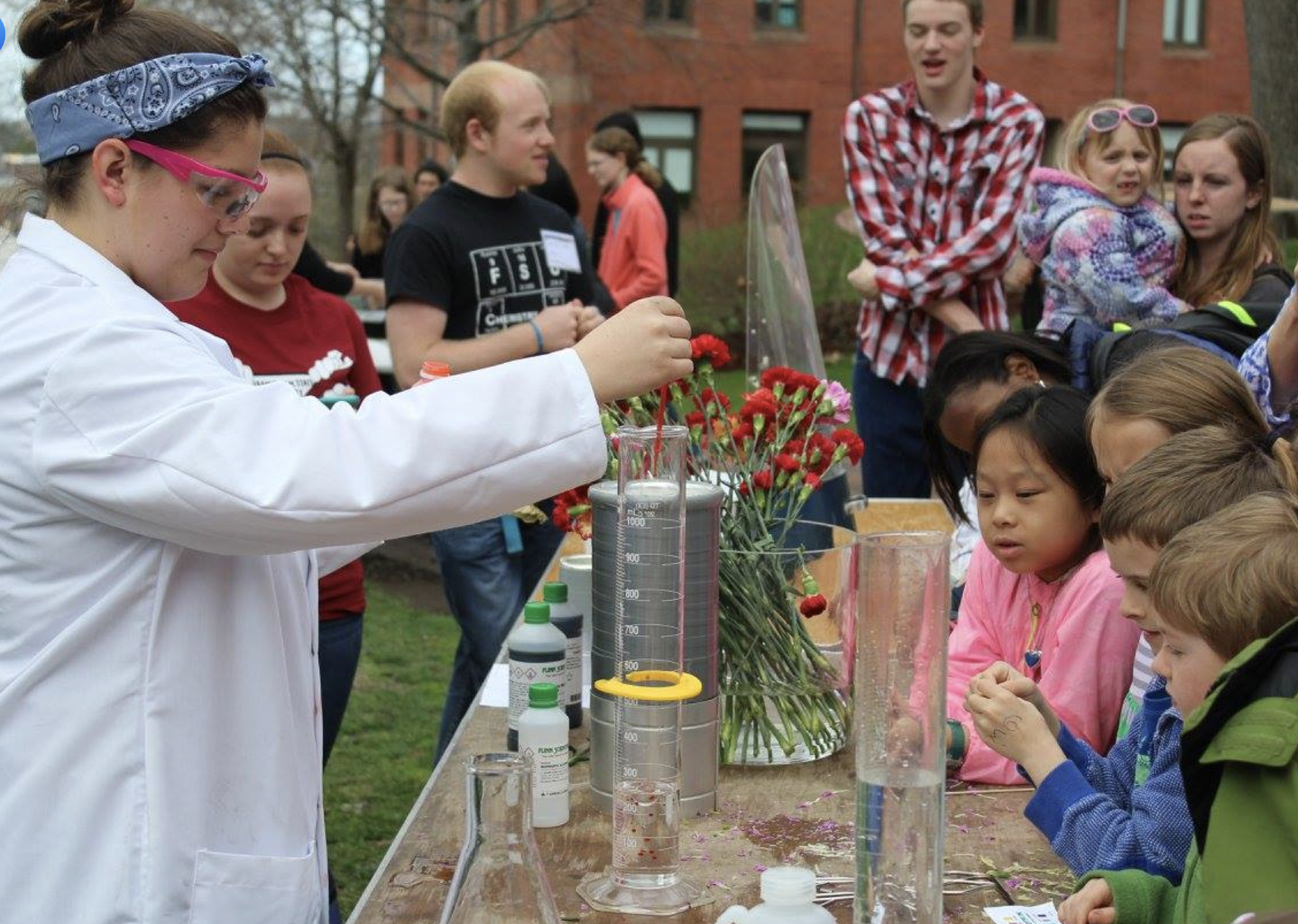
Science on State Street is Framingham State University’s annual science festival, a community-wide event organized by the Christa McAuliffe Center in collaboration with MetroWest STEM Education Network.
Science on State Street has a particular focus on themes relating to planet Earth. Explore science, technology, engineering, and math and the ways they support environmental justice, renewable energy, and environmental sustainability!
Explore 35+ exhibitors for:
- Hands-on Activities
- Interactive Demonstrations
- Engaging Discussions
- Planetarium Films
- And more!
The Nickel Boys Book Discussion
Tuesday, April 21, 11 a.m., Whittemore Library
Join Outreach and Student Engagement Coordinator Weronika Zawora to discuss The Nickel Boys, Colin Whitehead's 2019 Pulitzer Prize-winning novel. This discussion follows the February 18th screening of RaMell Ross' 2024 film adaption Nickel Boys, as part of The Arthur Nolletti, Jr. Film Series at Framingham State University.
The book discussion is open to ALL FSU members.
Financial Literacy Workshop
Wednesday, April 22, 1:30 p.m., CIE
Learn from Planned to A.T., a non-profit organization dedicated to assisting young individuals in achieving successful and stable financial futures.
Field Trip to Chinatown Boston
Saturday, April 25, leaves at 10 a.m., returns at 3 p.m., McCarthy Center Lobby
Join CIE for a tour through the heart of Chinatown, showcasing its rich history, unique architecture, and cultural significance. Transportation is provided.
What Links Us Together? Event 4
Saturday, April 25, 1 p.m. to 3 p.m., Pedestrian Bridge and Danforth Art School
This is a collaborative, year-long art project designed to encourage connections between friends and strangers. Community members across Framingham will write, draw, or stitch words on cloth to represent their identities. Then, using an actual bridge as a canvas, the cloth will be knotted and woven together. A digital artistic catalog will be presented at the final event.
Inclusion and Deprivation: Art and the Deaf Experience
Saturday, April 25, 2 to 4 p.m., DPAC
Deaf people live in a hearing world that often excludes them without consideration and leads to language deprivation. Deaf artists Amanda Hilleque and Isabella Bucci will present work that challenges the assumptions of communication, identity, and privilege, and raises awareness about the everyday reality of being Deaf.
What Links us Together?
Saturday, April 25, 1 to 3 p.m., Pedestrian Bridge and Danforth Art School
The final event in a collaborative, year-long art project designed to encourage connections between friends and strangers. Community members across Framingham will write, draw, or stitch words on cloth to represent their identities. Then, using an actual bridge as a canvas, the cloth will be knotted and woven together. A digital artistic catalog will be presented at the final event.
FSU Garden Tours
Wednesday, April 22, 12:30 p.m., McCarthy Center
Join Campus Sustainability and the Green Initiative Club with a tour of the community and pollinator gardens, and a community garden clean-up!
16th Annual Book-Themed Cake Decorating Contest Voting
Tuesday, April 21, 2026, 9am – 12pm, Library Foyer
Join us in the library front lobby on April 21st to pick the winner of the 16th Annual Book-Themed Cake Decorating Contest.
Voting will run from 9:00AM - 12:00PM. Winners will be announced at 12:30PM (via phone/e-mail) and we then will cut into these delicious creations and offer them to patrons.