
Impact on Framingham
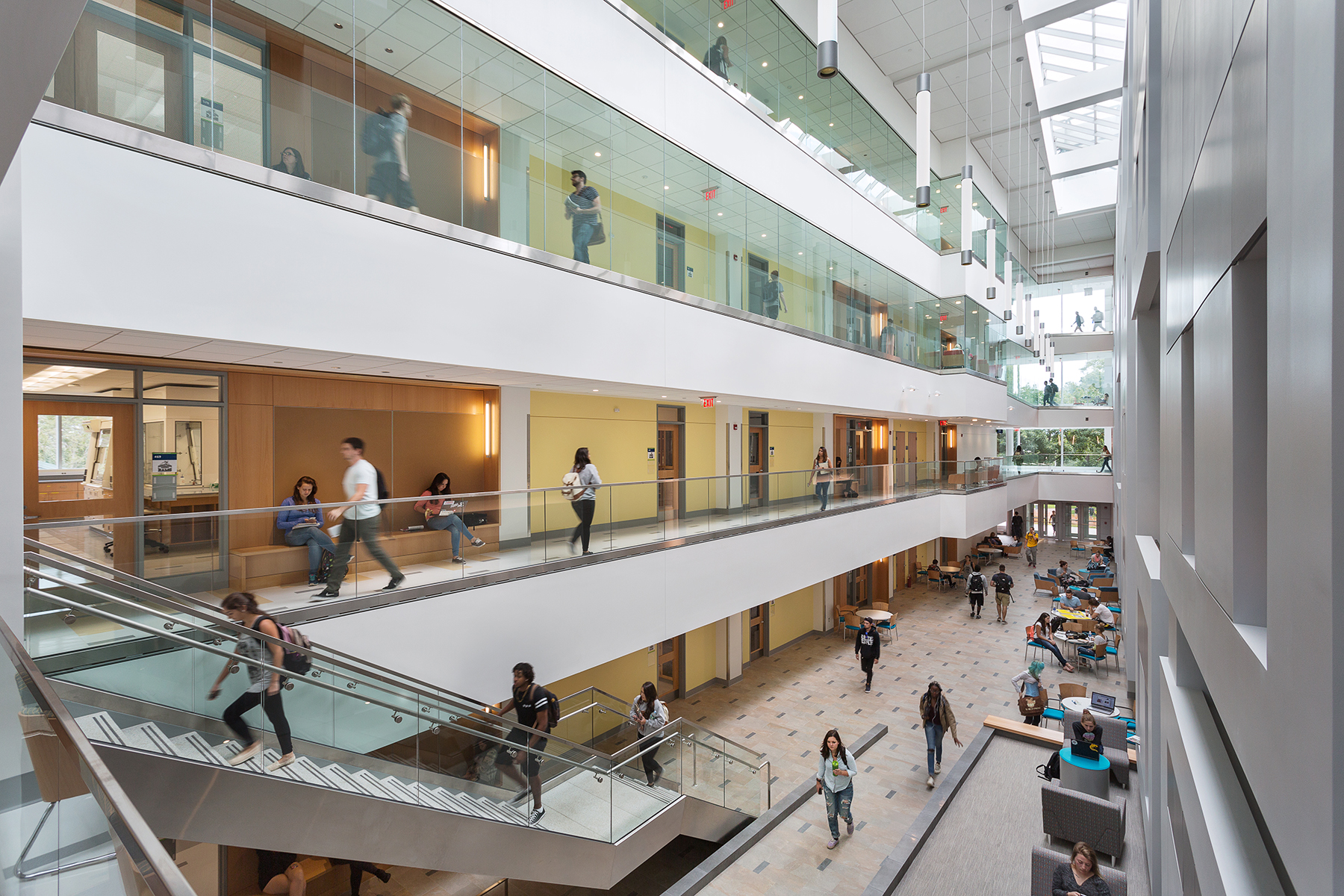
Framingham State recently rededicated Hemenway Labs in honor of Professor Emeritus Thomas Eames and his wife, Joan, who generously donated more than $2 million to support the sciences at FSU. For more than four decades, Thomas Eames taught chemistry and food science at Framingham State, shaping the academic journeys of countless students.
Since the name "Eames" now graces one of our buildings, we feel it's important to share the long and impactful history of the family, which stretches back to the arrival of Thomas Eames in 1634 and unfolds as a thread interwoven in Framingham’s history. Across generations, Eames descendants helped shape both local life and the broader American story. They marched at the opening of the Revolutionary War, joined the Gold Rush’s western movement, and contributed as craftspeople, artists, educators, entrepreneurs, and community leaders. Their imprint remains visible in Framingham’s landscape, from Eames Brook and Eames Street to historic buildings and sites connected to their name, as well as in cultural contributions that reach far beyond Massachusetts, including in the fields of design, agriculture, and anthropology.
That history also holds difficult chapters. Most famously, in 1676, during King Philip’s War, members of the Eames household were killed and others taken captive in what was once called the “Eames Massacre.” The language and framing of that event have changed over time, and earlier narratives have not always accounted for the full context or the experiences of Indigenous peoples who suffered violence and loss of land. As Framingham continues to reflect on its past, the Eames story offers an opportunity for deeper understanding and dialogue. Learn more through the Framingham History Center’s online exhibition.
Notable Eames family members and dates in Framingham:
- During King Philip’s War (a war between English colonists in New England and many local native tribes) an event occurred that used to be referred to as the “Eames massacre,” although historians have stepped away from using that phrase as we learn more about the context surrounding it. On February 1, 1676, while Thomas Eames was in Boston requesting that the colonial government send support to protect his farm, the farm was attacked by 11 Nipmuc men. His wife and 4 of his children were killed, the house and barns were burned, and livestock killed. At least 3 other children were taken captive. The exact way that events unfolded that day are unknown. The Nipmuc men’s intention in going to the house was at least in part to reclaim food supplies they had stored on their land nearby that had disappeared, and sources suggest that they were correct that these supplies had been taken by the Eames family. Whether they intended violence as well is unknown.
The three children who we know were taken captive later returned to the English, through escapes and a prisoner exchange. By some accounts 2 additional children were taken captive, at least 1 of whom may have been integrated into native communities. Many of the Nipmuc men who were involved died in the war, but 3 who survived the war itself were convinced to turn themselves in with promises from the Massachusetts colonial government that if they did so, they would receive amnesty. They were instead put to death. Thomas Eames was granted a large amount of land (at least 200 acres, maybe as much as 500 acres) as compensation for the events that had happened. Before the war he did not own any land (the farm was on land owned by Thomas Danforth, although this land may not have been formally ceded by the Nipmuc until 1684). Additionally, the land given to Thomas Eames was confiscated from the “praying Indians” of Natick, despite the fact that these Christian converts were not involved in the events that led to the deaths of members of the Eames family, a continuation of the colonial government’s distrust and harsh treatment of them during the war, despite the fact that they did not align themselves with those fighting.
- In 1721, Henry Eames built what became known as the “Eames Red House” on Union Avenue. It was enlarged in 1854 and 1810, and then in 1969, the structure was moved to Prospect Street.
- Captain Jesse Eames of Framingham served during the Battle of Lexington and Concord in April 1775.
- Mary Eames Rice (daughter of John Eames and married to Captain Uriah Rice) started the straw bonnet industry. Mary and her daughters harvested and bleached rye, split and braided it and made straw bonnets. Rolls of straw and bonnets were featured items in the Wheeler and Warren stores in Framingham Center. Mary helped South Framingham emerge in the straw cottage industry market after she began successfully marketing her bonnets throughout New England. Eventually, the straw bonnet industry expanded into large factories where hundreds of workers were employed.
- Henry Eames - musician, piano instructor, lecturer
- Katherine Eames - artist
- Lovell Eames, brother of Abel Eames, gave the Town of Framingham a lot to be held for a “Common” in perpetuity in 1854. It became later known as the Park Street Common or South Common.
- Alfred Eames launched one of the largest manufacturing businesses in South Framingham in 1864. His wheel-making business expanded to the manufacturing of rubber tires, and he built a factory on Franklin Street. Alfred also served on the Board of Selectman.
- Edwin Eames developed 4 acres of Eames land as a commercial park in 1846, called Harmony Grove, with space for lawn games, swings, a boat house, and a dance pavilion. In 1851, he sold the land to Lothrop Wight. Harmony Grove became an active site for the anti-slavery movement in Massachusetts, famously hosting speakers including Sojourner Truth and William Lloyd Garrison.
- In 1864, Edwin Eames of Harmony Grove (recreation area) created a brand-new industry in Framingham to harvest ice locally from Framingham ponds, where it would then be shipped to warmer regions and stored for sales in the summer.
- H. Gardner Eames was a real estate developer and built 14 apartment buildings on Gordon Street in the 1900s.