
Campus Currents
October 28, 2024
Fall Open House This Weekend
The second and final undergraduate Open House of the Fall semester is scheduled for this Saturday, Nov. 2nd from 9 a.m. through lunch! We are grateful to the students, faculty and staff who make themselves available for this important admissions events, as we do our best to demonstrate what an incredible community we have here at FSU.
Swiacki Children's Literature Festival
November 7, from 3 to 9 p.m., McCarthy Center
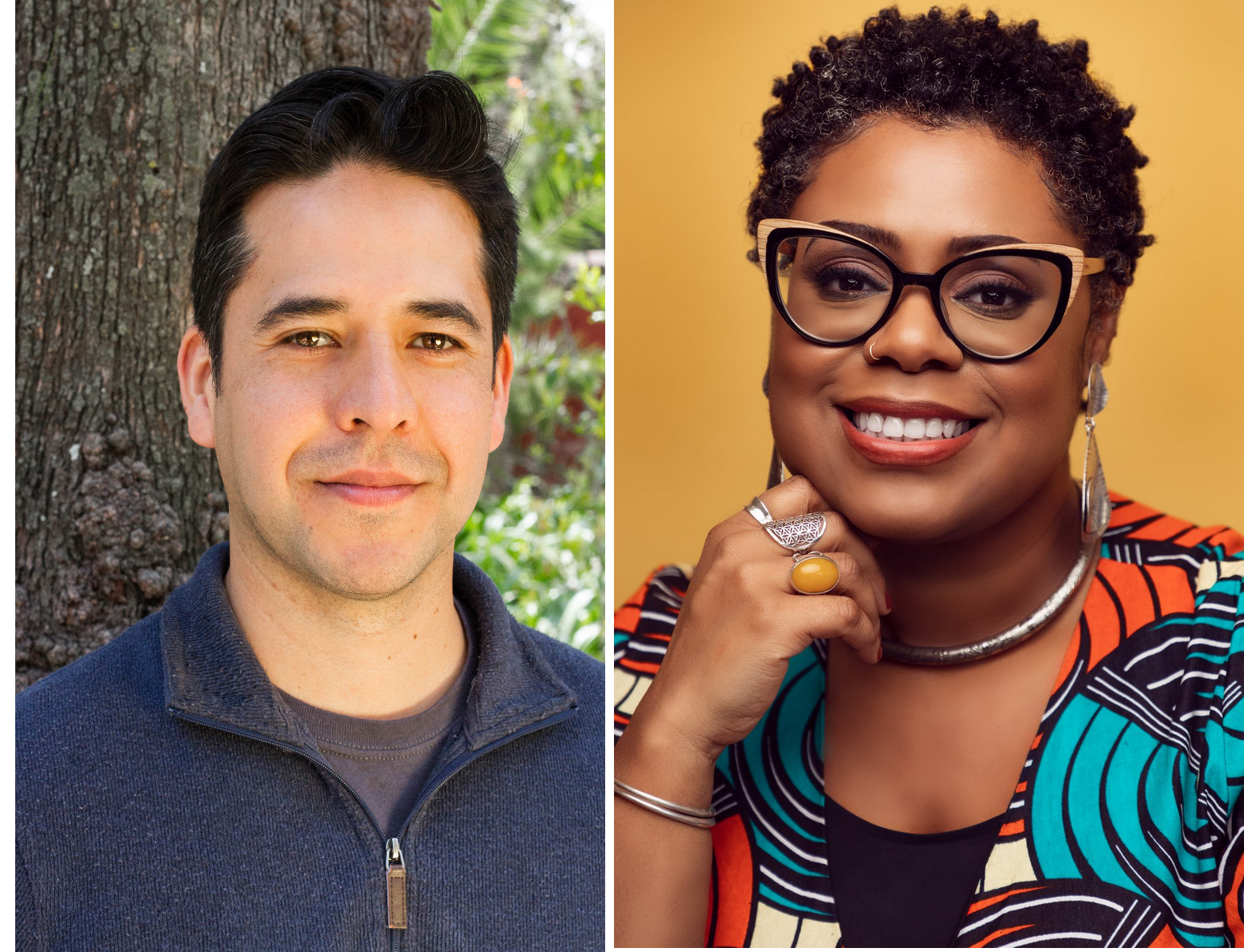
This day-long, annual celebration of children’s books featuring renowned authors and illustrators includes book signings, a gallery exhibit, lectures and workshops. We welcome to campus author and Coretta Scott King award-winner Ibi Zoboi and author/illustrator Duncan Tonatiuh. Free admission for FSU students (registration required).
Learn more at: https://www.framingham.edu/events/2024-swiacki-childrens-literature-festival
Additional Events This Week
Cultural Competency Workshop
Tuesday, Oct. 29, 2:45 to 3:45 p.m.
Center for Inclusive Excellence
This workshop will engage participants in education and skill development around Cultural Competency, its impact in society, and how it can be a tool in successfully navigating conflict, interactions, and situations they encounter.
RSVP with this link: https://framingham.qualtrics.com/jfe/form/SV_ekWn312G6s9Rn0y
Cultural Programming Council Dinner: Planning Successful Fundraising Activities
Wednesday, Oct. 30, 6 p.m.
Center for Inclusive Excellence
Get tips on successful fundraising techniques for your organization. Come learn how your organization can receive financial support from the CIE for programs that enhance diversity, equity, and inclusion on campus. Share your upcoming events for the semester with other organizations and enjoy a free dinner!
RSVP with this link: https://framingham.qualtrics.com/jfe/form/SV_3DGoi50gFp5QyFw
Create Effective Prompts for Conversations with Generative AI
Thursday, October 31, 2024 at 1:30 PM
Hemenway Hall Room 107 or via Zoom
Register Here: https://reg.learningstream.com/reg/event_page.aspx?ek=0005-0021-96a53bc1bb3047d386fe6bf94454c15b
We get the best results from tools like ChatGPT and Copilot by engineering specific and detailed prompts. Bart Brinkman of the Center for Digital Humanities will join ETO to talk about strategies we can use to get better outputs from generative AI. During the session, we will help you to craft a prompt of your own and try it out.
Play with DH Workshop Series: Voyant Tools
Friday, Nov. 1, 3:00-4:00pm
Center for Digital Humanities or Zoom
Learn simple text analysis and visualization - students and faculty welcome, no experitze necessary!
Practical and Ethical Machine Learning in the Humanities
By Alain Puma, Publications Intern
Dr. William Mattingly is the Machine Learning Postdoctoral Fellow at the Smithsonian Institution’s Data Science Lab. He spoke about machine learning in his work with Placing the Holocaust - a project analyzing 1,000 Holocaust testimonies, and the Personal Writes the Political - a project analyzing handwritten letters from women in Apartheid South Africa.
Machine learning involves the development of algorithms capable of independent learning through exposure to the data it is given. Researchers use machine learning to analyze large amounts of data with the goal of transcribing the information, identifying patterns, and/or making predictions.
Dr. Mattingly emphasized the fundamental role it plays in the work of Placing the Holocaust, underscoring that it would be nearly impossible to do without it.
“Our goal is to use machine learning to go through these 1,000 testimonies - which we can’t possibly read - all of us would spend years reading them to get through all 1,000 of them. So, we wanted to use machine learning to discover vital information and cultivate data surrounding these testimonies, particularly data associated with geographical places,” he said.
“We’ve trained a machine learning model that can recognize our 12 different categories of places. Often, when you’re working with a machine learning model, there are only two categories for places. What we wanted to do was have a much more nuanced extraction of data from these testimonies to understand specifically where certain kinds of places are referenced in and be able to understand it on a deeper level,” he added.
Dr. Mattingly used a real-life example of his parents’ neighbor’s child mistaking the plastic penguin on his parents’ lawn for a duck to explain how machine learning works.
“He [the child] had four cats, three dogs, and a pet duck. So, he grew up around these animals. He knew what a dog was, he knew what a cat was and he knew what a duck was. But when he encountered the penguin - something he hadn’t seen before - he made the best - in machine learning terms - prediction that he could have made. He hadn’t experienced seeing any other animals. In machine learning terms this is called reinforcement learning. In the example we just saw, we can give the system a bunch of examples of different things - cats, dogs, ducks, penguins - and it can learn to classify each one of those,” he said.
Dr. Mattingly used his experience working on the Personal Writes the Political project to highlight the ethical issues that arise in the machine learning field.
“These [letters] are highly sensitive. These pen pal relationships would last for decades. Discussions of very intimate details are included in these. So, divorce, cheating, abortions are all detailed in these. It’s very important for us to not look at these letters. Rather, to let those in South Africa be the ones who examine them,” he said.
Dr. Mattingly outlined how he and his colleagues worked to overcome the ethical issues.
“Typically, when you’re training a machine learning model, you examine the results, adjust to get more data, cultivate more data and then you train the model again. And you’re able to see how well the model is performing on the data. But we couldn’t do that in this scenario. So, what we came up with was synthetic data. This is entirely fabricated. It is generated by our large language model. It generates a collection of letters that are very similar in structure to the original letters. The ethical dilemma is removed because all of the names, events, experiences, places - are completely fictionalized. This allows us to use the synthetic data to train machine learning models, analyze the results, make adjustments, and then have a model that those in South Africa can use. This allowed us to get around the ethical and legal challenges we encountered with this data,” he said.
Alan Feldman Week of Poetry: A Reading with Stephanie Burt
By Alain Puma, Publications Intern
During a recent poetry reading, Stephanie Burt noted the positive impact that her choice to openly be the person she truly is had on her writing.
“My poetry is much more fun [now]. My saddest book - a book called “Belmont” - which I have trouble reading from - usually, was written when I was trying to be a dad. I’m a mom. I was a mom trying to be a dad and it was really frustrating,” she said. “My most fun, happiest book is the most recent one. Making my queerness and trans-ness visible in my daily life has informed my work a lot,” she added.
Burt is a distinguished literary critic, author of nine published books, and a professor at Harvard University - who notably teaches a Taylor Swift-focused course.
During the poetry reading - held on October 21st event at the Heineman Ecumenical Center - Burt recited a poem that was inspired by her affinity for the X-Men franchise - particularly the character Wolverine - as well as her experiences as a transgender person.
“There are two Wolverine poems in here. This one is about the weirdness of being a queer elder - like a trans elder - where you’re the oldest trans person you know. Which is true for me,” she said.
Additionally, Burt spoke about her writing process and how she is able to be so productive as a writer.
“Poems usually start with a phrase that I like. But sometimes, I carry a subject around, or a thing I want to write about in my head for months or years before the phrase works. I start a lot more poems than I finish. I carry a notebook around,” she said.
“If I waited for the right circumstances, or the right kind of pen, or the right hour of the day, I’d never get anything written,” she added.
Burt also noted that her motivation to write poetry is other people.
“I like making connections to people and nothing will get me to write a poem or finish a poem or do anything more easily than the sense that somebody I care about wants to read it when I’m done,” she said.